
Emma’s Journey with FTWW
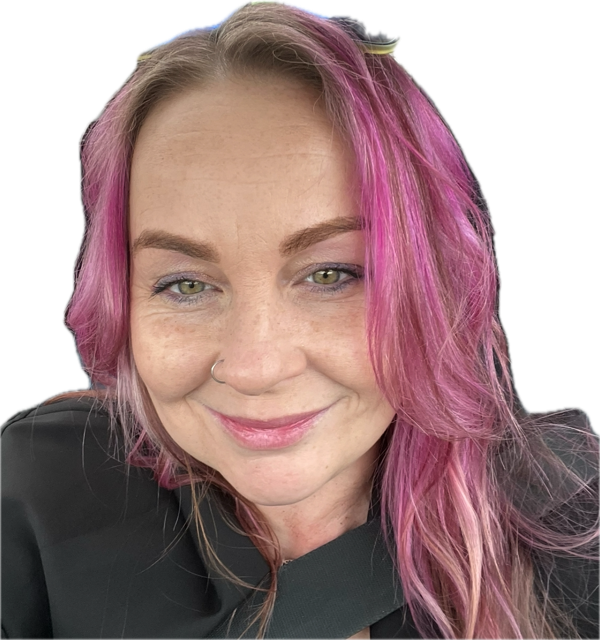
Yesterday, at a family birthday party, I watched my 17-year-old niece with dismay as she struggled to join in, as she sat quiet and curled up with tears in her eyes because she was experiencing extreme pelvic pain. It was like watching myself a couple of decades ago at the same age.
But my niece has a secret weapon.
Her secret weapon is me, and the support, confidence and knowledge I can use to educate her. Support, confidence and knowledge that I gained predominantly from engaging with FTWW. When I was 17, nobody told me that that passing out from period pain was abnormal, indeed I was told that this pain was perfectly normal and just part of being a woman.
The term ‘life-changing’ may sound dramatic when discussing engagement with an online community, but it is true, and it will likely change the life of my niece, and countless other children and young women who benefit from the trickle-down effect of FTWW’s work. Perhaps what my niece learns from me, the knowledge that I learned from FTWW, she will pass on to future generations of women and girls. The potential impact of this is incredible.
Many years ago, a chance encounter on Facebook changed my life, and changed my whole relationships my body and a disease that I have called Endometriosis.
After repeated visits to the GP, around the time I discovered FTWW, I was referred to a gynaecologist. This gynaecologist was very persuasive and adamantly insisted that the only way to treat endometriosis was to have a hysterectomy. In tears, feeling that I had no choice, I signed the paperwork. I was 27, recently married and my plan to start a family was in tatters.
Whilst on the waiting list for this operation, two things happened. The first was that a young, new GP in the practice noticed that my main symptom – a horrific pain in my shoulder – coincided with my period. He googled my symptoms (oh yes GP’s also use google!) and mentioned the term ‘thoracic endometriosis’. The second was that I met a group of women via Facebook, and I started talking to them. What I discovered was that I didn’t need a hysterectomy, or at least not yet. What I needed was a referral to an Endometriosis Specialist Centre for further investigation, because if I did have thoracic endometriosis, a hysterectomy potentially would not cure it. The women in the group supported me, understood how I was feeling and signposted me to information that I would not have had otherwise. Information that I still use to signpost women and professionals on a monthly basis.
I cancelled the hysterectomy and managed to get a referral to a specialist centre. Challenging the NHS was not easy as I am sure many have experienced, and I absolutely would never have been able to do it without the support of FTWW.
Since then, I have had endometriosis removed from not only my pelvic cavity, but my bowel, lungs and liver, multiple operations that not only improved my quality of life, but most importantly, allowed me the time to become a mother. As it happens, I am now again on the waiting list for a hysterectomy, but this time with endometriosis and colorectal specialists – surgeons I would not have access to without the support of FTWW. When I need information about surgical menopause, HRT and recovery from the operation, I know that the FTWW community will again support me and arm me with the information to advocate for myself.
Had I not been armed with the support of FTWW, I would not have been able to conceive, my liver would still be full of endometriosis lesions, my bowel would be completely dysfunctional, and my son would literally not exist. FTWW enabled me to experience motherhood, and I’ll be forever grateful for this wonderful community.
If you would like to read more and hear my updates, you’d be welcome to check out my Substack.
Our campaign areas include...
Menopause
Let’s inform and empower those experiencing menopause! It is #NotJustHotFlushes!
Endometriosis
Endometriosis affects at least one in ten women, girls and people registered female at birth.
Autoimmune
Women are four times more likely to develop autoimmune diseases than men.
 English (UK)
  Cymraeg