
Carly’s Journey with FTWW
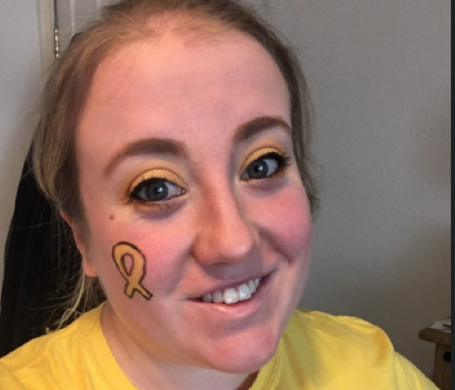
My name is Carly! I am AuDHD (Autism and Attention Deficit Hyperactivity Disorder) and have endometriosis, adenomyosis, pelvic venous disorder, Premenstrual Dysphoric Disorder (PMDD), Post Traumatic Stress Disorder (PTSD), and hypermobility. I am a volunteer for Fair Treatment for the Women of Wales.
I found Fair Treatment for the Women of Wales way back in the very early days of the organisation in 2015. Back then I was rarely able to leave the house due to the effects of my chronic illnesses, so finding this organisation gave me a community I could still access that understood what I was going through. This support has been invaluable to me over the years.
Volunteering for Fair Treatment for the Women of Wales has given me so many opportunities, including my career in the charity sector. I ran two local support groups for ten years and also sat as a patient representative on the Welsh Government Endometriosis Task and Finish Group back in 2018. I have participated in various research projects on endometriosis. I have also attended countless meetings and conferences to ensure patient voices are heard regarding gynaecology, mental health, and maternity experiences.
FTWW has given me confidence, knowledge, support, and a network of amazing people.
It enabled me to advocate for myself to ensure I received the right care for my health conditions. It also gave me the confidence to step into a new sector of work.
Thanks to FTWW, I have worked within the mental health sector, social work, charity governance, charity and social enterprise funding, co-production, and with care-experienced children and young people.
I will be forever thankful to this organisation and its incredible team for all it has given me.
Our campaign areas include...
Menopause
Let’s inform and empower those experiencing menopause! It is #NotJustHotFlushes!
Endometriosis
Endometriosis affects at least one in ten women, girls and people registered female at birth.
Autoimmune
Women are four times more likely to develop autoimmune diseases than men.
 English (UK)
  Cymraeg