
Toolkit Case Study: Eliza’s account of seeking support from her healthcare providers.
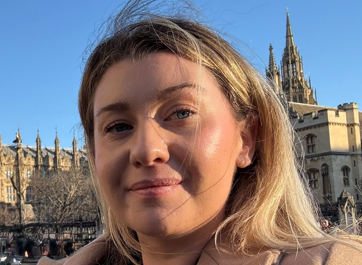
I was around 13 years old when I first started experiencing symptoms that I now know were linked to endometriosis. At the time, I had no language for what was happening to me. I just knew I was in pain.
One of my earliest memories of the pain is sitting in a chair as a teenager, screaming in pain while my mum looked at me first with confusion and then increasing concern as the pain went on and on. I was writhing because of severe shooting pains through my pelvis, but I couldn’t get up out of the chair, and I genuinely thought I was dying.
Alongside the pain, I was constantly exhausted. Over time, I experienced severe pelvic and abdominal pain, back, shoulder, and chest pain, painful periods and bleeding between periods, nausea and sickness, urinary urgency and frequency, pain with bowel movements, pain after sex and extreme fatigue.
These symptoms had a huge impact on my life. I missed significant amounts of school, struggled to concentrate, and felt unwell even outside of my periods. I rarely spoke about what I was going through and felt embarrassed and ashamed. I began to internalise the idea that I was weak or overreacting.
I first went to the GP in October 2006, at 13 years old, because I was constantly exhausted and struggling to attend school. I was sleeping for 16 hours a day during my period. This was not something I felt confident doing on my own, it came with family awareness and concern, but I still felt unsure how to explain what was happening.
I was in a lot of pain and couldn’t get out of bed. My Mam made me the appointment and came with me as she was worried about how much pain I was in.
Before the appointment, I felt nervous, but I also felt like I could trust the GP and that they would help me even though I found it difficult to explain my symptoms and how I felt. I was confident that the GP would get to the bottom of it.
Initial investigations focused on fatigue. Blood tests were normal, and symptoms were attributed to a ‘readjustment reaction’ or possible glandular fever. I was told to rest.
In January 2007, I returned because the exhaustion had not improved. A Paul Bunnell/monospot test was discussed, and again the focus remained on glandular fever. During this time, I was told to ‘stop kissing boys’, despite never having kissed anyone. The test later came back negative.
In these early appointments, I didn’t feel listened to in a holistic way. My symptoms were treated in isolation, and I felt confused, dismissed, and increasingly unsure of my own body. Despite this, I continued to respect and trust the GPs and had hope that they would be able to help me. My family reassured me that I could trust the medical professionals.
Over the next several years, I repeatedly attended medical appointments with worsening and overlapping symptoms.
Different explanations were suggested, including, stress and anxiety, reflux, urinary tract infections, bladder problems, ‘normal’ period pain and sexually transmitted diseases. The suggestion that my symptoms could be due to an STI led to concerns about possible unfaithfulness within my relationship. This caused significant emotional distress and had a detrimental impact on my relationship with my partner.
I was prescribed the contraceptive pill at 16, and later the depo injection in 2010, and the coil in 2014, but these did not address the underlying issue and sometimes made things worse.
While at university (2012–2016), my symptoms escalated significantly. I had, severe pelvic pain, worsening bladder symptoms, constant urinary urgency, profound exhaustion, back and leg pains, and difficulty taking deep breaths.
I was repeatedly treated for suspected UTIs, despite negative cultures, and eventually referred to urology. In 2014, I underwent a cystoscopy, bladder dilation, and biopsy, which showed chronic inflammation.
Although I received bladder treatments, the wider pattern of symptoms was still not recognised. I did not feel I was getting what I needed from appointments and often felt disbelieved.
The impact on my education and life was severe. I missed lectures, deferred a year of university, and avoided relationships and social activities. At my worst, I could sleep for 20 hours a day during my period and still feel exhausted.
What prompted me to look for other information and support was how much my condition had progressed by my mid-20s, combined with a growing sense of isolation and the feeling that my experiences were not being understood within healthcare settings.
After completing my master’s degree and securing my dream job as a Research and Development scientist, my pain had become so severe that I felt like I needed a wheelchair at times because it was becoming too painful to walk. This was a turning point where I realised something was seriously wrong and I started doubting the GPs and other medical professionals that were responsible for my care.
Around this time, I began researching my symptoms independently and sought support through online patient communities. I came across information online about endometriosis. This was the first time I encountered others describing experiences like mine and, for the first time, I recognised my symptoms reflected in what I was reading. I used an online template to start keeping a symptom diary to better understand patterns and prepare for appointments.
Through work, I was able to access private medical insurance and was referred to a specialist. The support I received from the insurance company was fantastic and they provided me with a list of specialists that they recommended.
I remember still needing a referral letter from my GP to give to the medical insurance company, and even during that phone call at 27 years old, my symptoms were still described by my GP as ‘just bad period pains’ and I was told that, ‘I shouldn’t even bother getting referred as this was “normal” and they would “only give me the pill anyway”’.
However, when I saw the specialist, the experience was very different. After listening closely to my symptoms, he told me that it was likely I had endometriosis. He also signposted me to organisations such as Fair Treatment for the Women of Wales (FTWW) and Endometriosis UK while I was waiting for an MRI scan and considering treatment options.
MRI and laparoscopic surgery confirmed widespread complex stage IV endometriosis, affecting multiple areas including rectovaginal septum, sigmoid colon, appendix, abdominal wall, diaphragm, bowel and bladder.
In the end, I didn’t even need to rely on the symptom diary I had prepared, the recognition of my symptoms by the specialist was immediate. I felt respected and listened to, not once did he make me question my own sanity or autonomy over my body.
Receiving the diagnosis brought both relief and validation but also anger and grief at how long it had taken.
Along with FTWW and Endometriosis UK, my family have been a constant source of support. After receiving a diagnosis, my Mum told me that she also had a diagnosis of endometriosis and was diagnosed in her late 20s. However, due to the varying symptoms she did not realise how much of an effect endometriosis could have as her symptoms were so different to mine, or she didn’t attribute some of her symptoms to the endometriosis.
Accessing external support from the consultant at the local tertiary centre for endometriosis and being signposted to FTWW and Endometriosis UK was life changing.
It helped me to feel validated and less alone and to understand that my symptoms were not ‘normal’, that it was not my fault and there was an underlying disease causing these debilitating symptoms all along. It helped me to build confidence in advocating for myself and access trusted resources and information.
Over time, this support improved my interactions with doctors and health care professionals, and I felt much better able to get what I needed out of appointments because accessing information and support through organisations like FTWW and Endometriosis UK gave me the language and confidence to clearly describe my symptoms and ask direct questions. I became more comfortable advocating for referrals, challenging dismissive explanations, and ensuring my concerns were fully addressed. This was a significant shift from earlier experiences where repeated instances of not being listened to or believed often meant that I left appointments feeling unheard and unsure and started to distrust medical professionals.
Receiving the diagnosis brought both relief and validation but also anger and grief at how long it had taken. My condition is ongoing and complex, but it is better managed now than it was in the past. Having a confirmed diagnosis has made a huge difference in accessing appropriate care and understanding what my body is experiencing. While symptoms still impact my daily life, I now have more structured support, treatment options other than the pill, and a better understanding of how to manage flare-ups and plan around my health.
Although my condition is ongoing and complex, I now feel far more informed and empowered even though there are still significant challenges. Even following two excision surgeries, endometriosis continues to affect my pain levels, energy, and overall quality of life, as well as work, relationships, and day-to-day functioning.
There are also ongoing challenges within healthcare, including delays, variability in care, inability to access excision treatment due to location, and the need to repeatedly advocate for myself due to the lack of understanding around endometriosis being a chronic, system, inflammatory condition with gynaecological manifestations and not just a bad period.
I now feel far more able to navigate these challenges and speak openly about them. I have more confidence in recognising when something is not right, seeking the right support, and communicating my needs clearly. I no longer see myself as ‘overreacting or weak’, but as someone who understands their condition, deserves appropriate care, and is empowered to seek it out.
I would absolutely encourage people to persist in seeking medical help, even when it feels difficult or discouraging. Ask for second or third opinions if needed.
Endometriosis can affect every aspect of life, education, work, mental health, relationships, and identity. People deserve to be heard much earlier than many of us are.
Persisting does not mean you are dramatic or difficult. It means you know your own body, are taking accountability for your health and know that your health matters.
My top three tips for readers are as follows:
- Keep a written record of symptoms and appointments because patterns become clearer over time.
- Seek a second, third, fourth etc opinion if needed. Being told something is ‘normal’ repeatedly does not always mean it is. You know your body best, do not let anyone diminish your pain. It’s difficult for people who don’t have endometriosis to understand the full extent of the condition.
- Find support, whether through charities, communities, friends, or family. Surround yourself with people who make you feel happy and safe, who will pick you up and fight for you when you’re tired of fighting for yourself. Being believed can make an enormous difference.
This story is part of FTWW’s My Voice Counts Self-Advocacy Toolkit. To return to the toolkit click here.
Our campaign areas include...
Menopause
Let’s inform and empower those experiencing menopause! It is #NotJustHotFlushes!
Endometriosis
Endometriosis affects at least one in ten women, girls and people registered female at birth.
Autoimmune
Women are four times more likely to develop autoimmune diseases than men.
 English (UK)
  Cymraeg