
Blog by FTWW Volunteer, Eliza
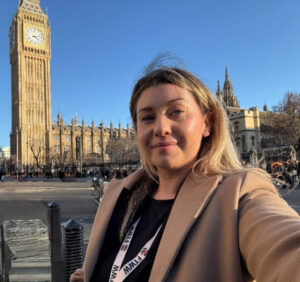
I’ve been proud to volunteer with FTWW for the past five years, serving as a Gynaecology and Maternity Champion. In this role, I advocate for women navigating diagnostic delays, inadequate support, and inequities across maternity and gynaecological services.
Bringing this experience, both professional and lived, into a space like the House of Commons felt powerful, grounding the event’s discussions in the real-world impact of service gaps.
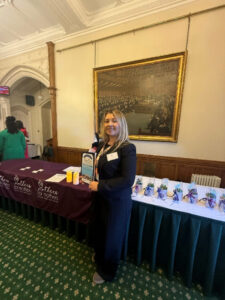
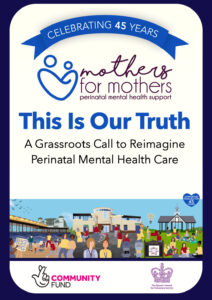
During February (2026), I had the privilege of travelling to London to represent mothers in Wales and Fair Treatment for the Women of Wales (FTWW). The event, held at the House of Commons and hosted by MP Karen Smith alongside Mothers for Mothers, marked their 45th anniversary and the launch of The Truth Is Out There, a landmark report elevating the voices of 23,000 women and birthing people on their experiences of perinatal mental health care across the UK.
Attending the event not only as an advocate but also as a patient with lived experience made it especially meaningful. Having developed maternal sepsis during labour and faced significant mental health challenges after my son’s birth, being in a space dedicated to perinatal mental health felt deeply personal and important.
About Mothers for Mothers & The Support They Offer
Mothers for Mothers is a specialist perinatal mental health charity supporting mums, birthing people, and families. Their work spans over 45 years, offering early, compassionate, and practical support to those experiencing emotional or mental health challenges during pregnancy and up to two years after birth.
They provide:
- Counselling tailored to perinatal experiences
- Peer support groups (online and in person)
- A helpline run by trained peer supporters
- Outreach and home visits for families needing extra support
- A dedicated focus on reducing isolation and supporting recovery
You can learn more about their services or get support here:
https://mothersformothers.co.uk/
What the Research Shows
The peer-led research, commissioned by Mothers for Mothers and conducted by UCL researchers, revealed several key themes:
- Perinatal mental health services are under-resourced, and mental health is still not treated as a priority.
- Support tends to be reactive rather than proactive.
- Relationships with healthcare professionals matter, these interactions shape whether people feel able to speak up.
- Wider life pressures significantly influence mental health.
- Parents are not hiding symptoms, they’re simply not being heard.
The findings reinforce one clear message:
Mental health is not a luxury; it is essential for women, birthing people, babies, and future generations.
Meaningful change requires standardised care pathways, personalised support, and services intentionally designed around the needs of the end user.
A Moment That Inspired Me
One of the most powerful parts of the day was the speech delivered by Mars Lord, an award-winning doula, educator, mentor, and founder of Abuela Doulas, one of the UK’s first training programmes created specifically for Black and Brown birthworkers. Mars trains inclusive, justice-driven birth workers, equipping them to challenge systemic inequalities and provide culturally competent care.
Mars is a leading and vital voice in Black maternal health, and her passionate speech asked a question that has stayed with me:
“If white-bodied women are struggling… then how are the Black-bodied women doing?”
Her words were deeply moving, grounding the event in the stark realities of inequality and the urgency of addressing them. Mars’s speech reminded me that women’s health, including perinatal mental health, needs voices that are willing not just to speak up, but to speak louder.
It strengthened my own resolve to keep advocating, sharing lived experience, and pushing for change in Wales and beyond.
The Bigger Picture
- 1 in 4 women and birthing people experience perinatal mental illness.
- Over half receive no specialist support.
In this gap, VCSE organisations, including Mothers for Mothers, often provide the only consistent support through counselling, peer groups, helplines, practical assistance, and advocacy.
Yet these organisations face unstable, short-term funding, rising demand, and the need for stronger collaboration with the NHS, alongside better awareness among health professionals of the support they offer.
Standing in the House of Commons among researchers, clinicians, advocates, charity leaders, and parents made one thing clear:
Families deserve better, and improving perinatal mental health requires commitment, funding, and action.
Read the full report:
PS: Random Fact
Did you know… Westminster has its own Post Office!?
An unexpected little discovery on the way in!
 English (UK)
  Cymraeg