
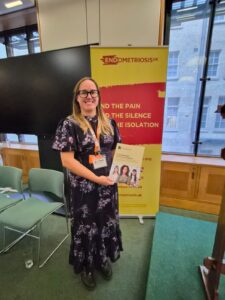
 A blog from Endometriosis Volunteer Champion, Lowri.
Hi, it’s me, Lowri.
Earlier this year, I travelled from Mid Wales to Westminster for the launch of the All-Party Parliamentary Group (APPG) Inquiry into Endometriosis and the Workplace. Clinicians, campaigners, employers and people with lived experience came together to discuss how workplaces could better support people with the condition.
A few months later, the inquiry has published its findings. The statistics are striking, but behind every number is someone trying to manage a chronic condition alongside work, career ambitions and everyday life.
Looking back at the launch
At the launch, speakers stressed the importance of hearing directly from employees and employers. People described struggling to access support, manage symptoms at work and protect their careers and wellbeing.
I left hopeful that sharing these experiences would lead to a clearer understanding of the challenges people face at work.
The findings are impossible to ignore
The inquiry heard from more than 6,200 employees with confirmed or suspected endometriosis and 250 employers.
Some of the findings are particularly striking:
- 97% of respondents had worked while experiencing severe pain.
- 94% felt employers lacked a good understanding of endometriosis.
- 62% worried about losing their job altogether.
- Nearly half had not received workplace adjustments.
- Almost half reported difficulties progressing their career.
- Many had lost income, reduced their hours, turned down opportunities or even left jobs because of their condition.
These figures are sobering, but not surprising. Through support groups, advocacy and my own experience, I regularly hear similar stories.
More than just numbers
Behind the figures are people continuing to work while managing severe pain, fatigue, appointments, surgery recovery and uncertainty.
Many do everything they can to stay in work yet still feel pressured to struggle in silence or worry about how their condition will be perceived.
The report shows that people with long-term, fluctuating conditions need greater awareness, clearer guidance and practical workplace adjustments.
Many solutions are straightforward: flexible working, supportive managers, time off for appointments, phased returns after surgery, and open conversations – all can help people remain in work and progress.
Why this matters
For me, the report shows why greater awareness and continued advocacy are so important.
Better understanding among employers, managers, colleagues, healthcare professionals and policymakers leads to better decisions, easier access to support and fewer people feeling isolated or overlooked.
The launch began an important conversation, and the report has added weight to it. The challenge now is to turn its findings into meaningful action.
What happens next?
The report calls for government, employers and organisations to work together to improve workplace support for people with endometriosis.
It gives a powerful UK-wide picture and shows how changes at work can remove many of the barriers people face. But I would have liked to see more about the Welsh experience, particularly the impact of rurality, access to specialist care and how Wales’s distinct policy and legislative context could support change.
Having travelled from rural Mid Wales to Westminster to join the conversation, I’m encouraged that lived experience has helped shape the wider debate. There is still a long way to go, but momentum is building and Welsh voices must be part of what happens next.
My strongest takeaway remains this: no one should have to choose between managing their health and building the career they deserve.
 English (UK)
 Cymraeg